What I learned
I worked with BBC news classification, IMDB sentiment, stacked LSTMs, GRU/LSTM/Conv1D comparisons, and sarcasm detection. Several experiments showed overfitting clearly, which made validation curves and generalization more important.
This course gave me a practical TensorFlow NLP layer before moving deeper into Transformers. It covered text vectorization, embeddings, recurrent models, convolutional sequence models, and classification tasks.
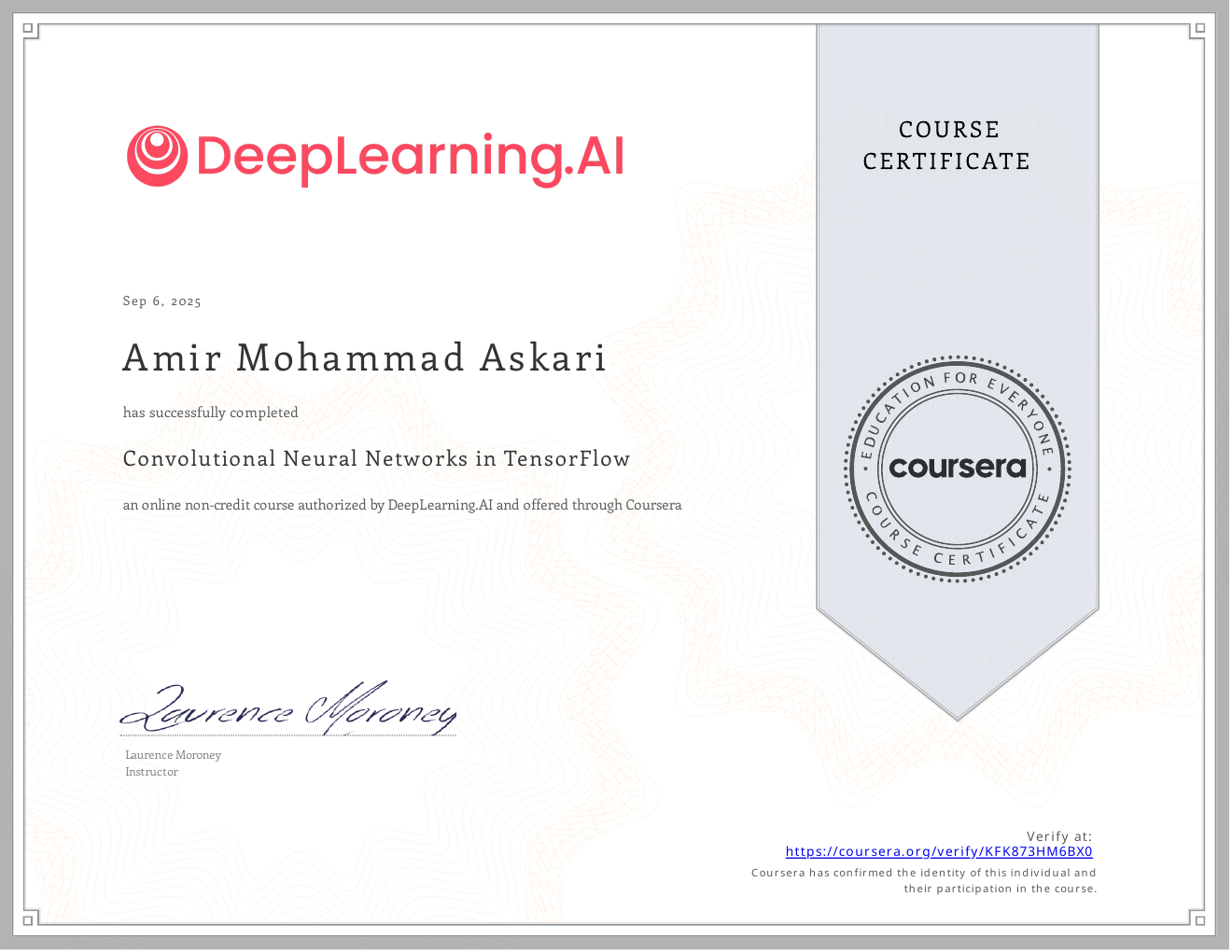
I worked with BBC news classification, IMDB sentiment, stacked LSTMs, GRU/LSTM/Conv1D comparisons, and sarcasm detection. Several experiments showed overfitting clearly, which made validation curves and generalization more important.
It prepared me for the next step: NLP with Transformers, Hugging Face, LLM internals, RAG, and agents.
Natural Language Processing in TensorFlow was not just a certificate item. I used it as one layer in a longer path: understand the concept, implement it in code, test it on assignments or notebooks, then connect the idea to future portfolio systems.
This course gave me a practical TensorFlow NLP layer before moving deeper into Transformers. It covered text vectorization, embeddings, recurrent models, convolutional sequence models, and classification tasks. The reason it matters on this page is that it shows the exact stage where my learning moved forward, instead of presenting education as a flat list of names.
The most important layer was not memorizing definitions; it was learning how the course concepts behave when they are turned into working code, trained models, evaluation outputs, and notebooks.
I treated the course as a practical loop: watch the theory, re-implement the assignment logic, inspect outputs, record results, and then keep the code in a public repository as evidence of the learning process.
It prepared me for the next step: NLP with Transformers, Hugging Face, LLM internals, RAG, and agents. This page also connects to standalone milestone pages, so the course is not represented only by certificate text; it is represented through the labs, models, notebooks, results, and media produced during the learning path.
I worked with BBC news classification, IMDB sentiment, stacked LSTMs, GRU/LSTM/Conv1D comparisons, and sarcasm detection. Several experiments showed overfitting clearly, which made validation curves and generalization more important. I also used the course to improve how I explain technical decisions: why a model is chosen, what assumptions it makes, where it fails, and what the next improvement should be. That explanation layer is important because my goal is end-to-end AI engineering, not only passing assignments.
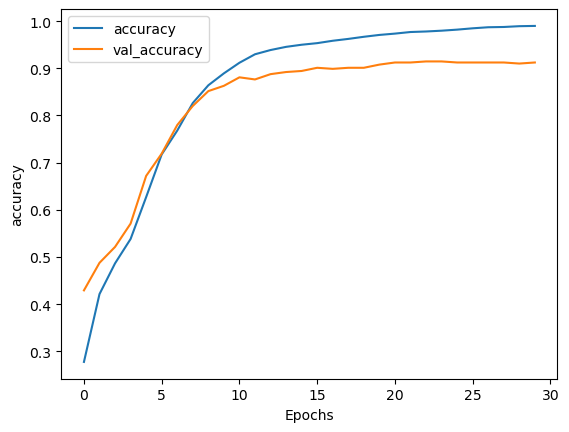
A 5-class news classifier that converts raw BBC articles into token sequences, learns embeddings, and predicts article categories.
Open milestone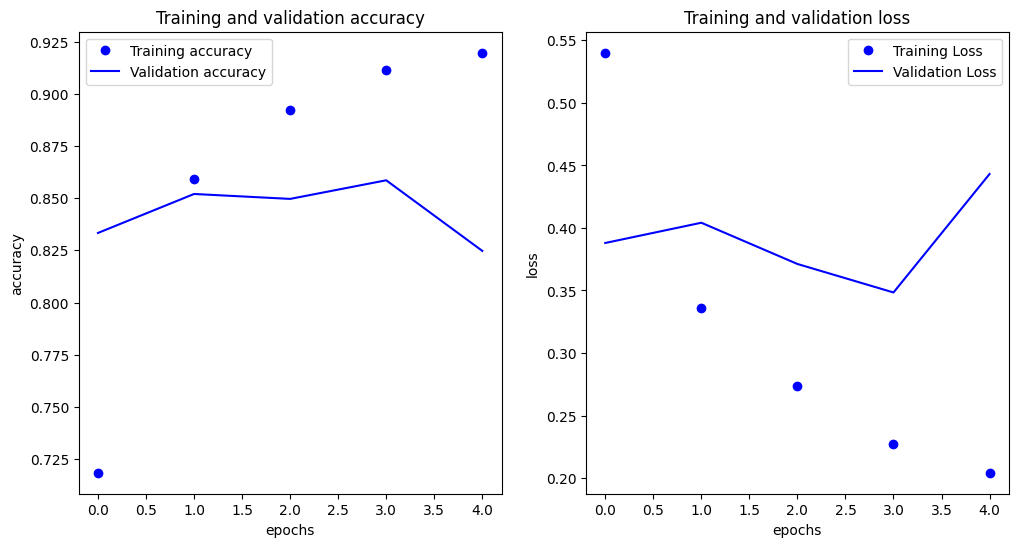
A binary sentiment classifier for IMDB reviews using subword tokenization and stacked bidirectional LSTM layers.
Open milestone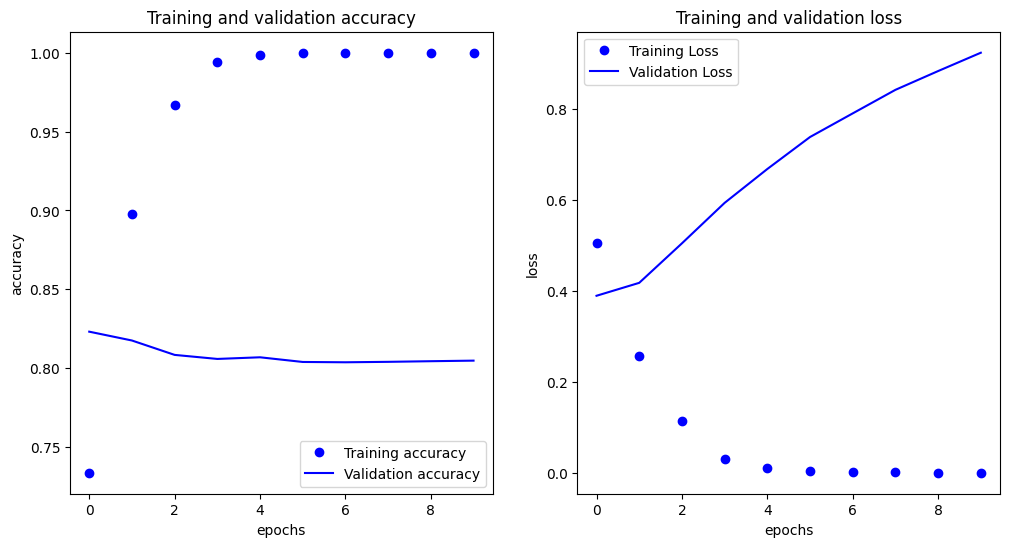
A model-comparison lab that tests Flatten, Bidirectional LSTM, Bidirectional GRU, and Conv1D architectures on the same IMDB sentiment task.
Open milestone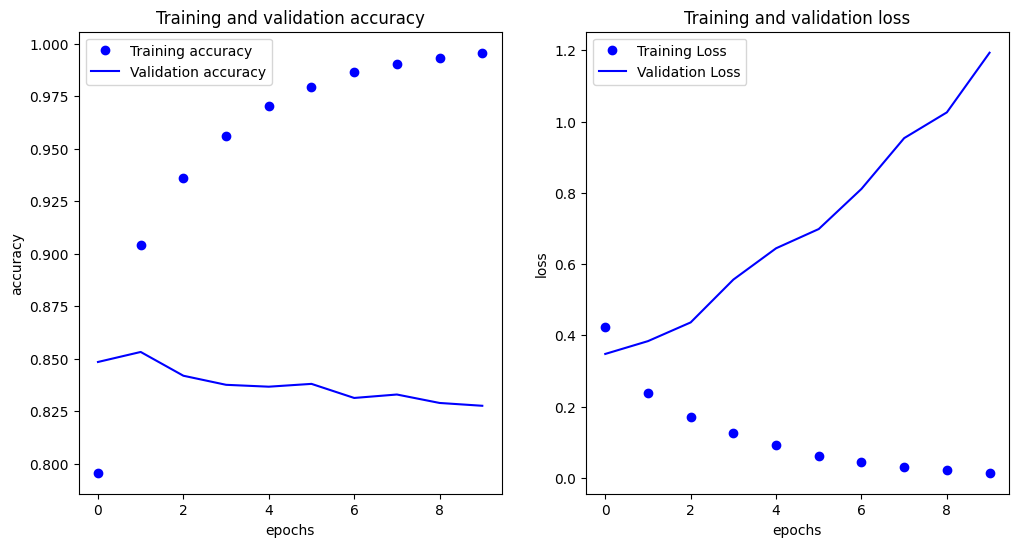
A headline-level sarcasm classifier using embeddings and a bidirectional LSTM to capture left/right context.
Open milestone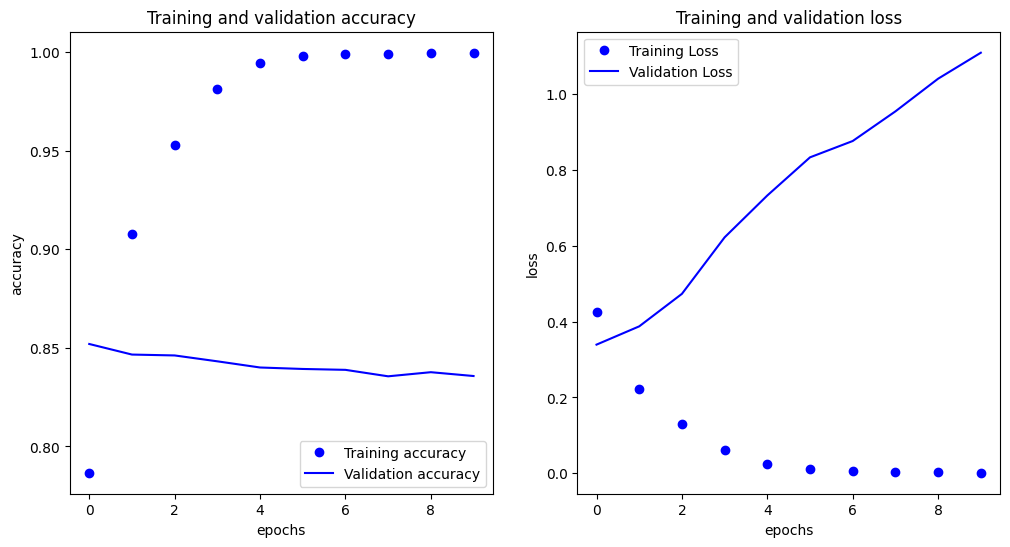
A fast text-CNN version of sarcasm detection that uses Conv1D and global max pooling to capture local headline patterns.
Open milestone