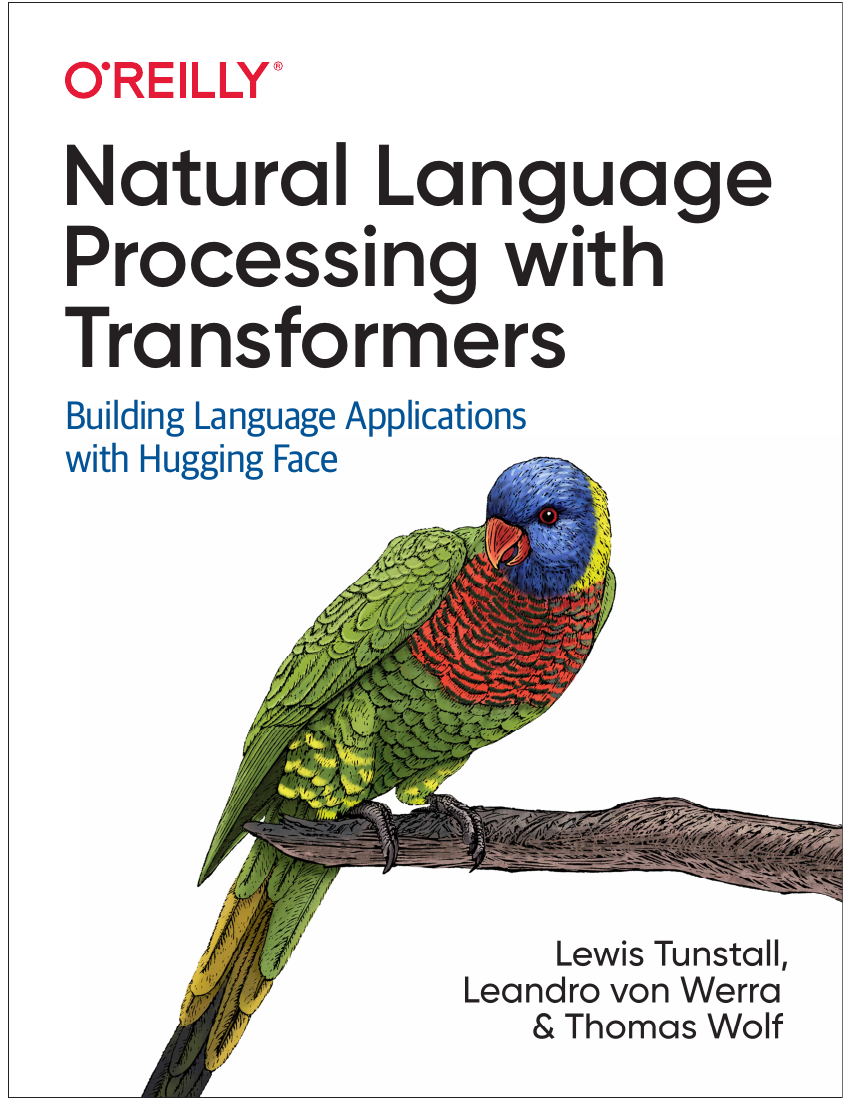
Reading purpose
This is part of my current NLP mastery path. After RNNs, LSTMs, and TensorFlow NLP, this book moves the focus to the modern Hugging Face ecosystem and transformer-based language applications. I did not treat it as a passive reading item. I used it to slow down, inspect architectures, connect code with theory, and understand the engineering decisions that are often hidden behind course assignments.
Technical layer I extracted
I am using it to understand Transformer workflows in practice: tokenizers, datasets, pretrained models, fine-tuning, pipelines, text classification, named entity recognition, summarization, question answering, translation-style tasks, and multilingual NLP. The important point is that this book gave me vocabulary and implementation structure: how to describe a pipeline, how to compare approaches, and how to think about model behavior beyond one training log.
Impact on my next work
This book is a bridge from course-level NLP to practical LLM-era development with Hugging Face, model hubs, fine-tuning workflows, and deployable language applications. It also made the bridge to larger portfolio projects clearer: each topic can become a deployable component, a research experiment, or a part of an end-to-end AI application.