Back to Education
Book · Mark Treveil and the Dataiku Team · O’Reilly

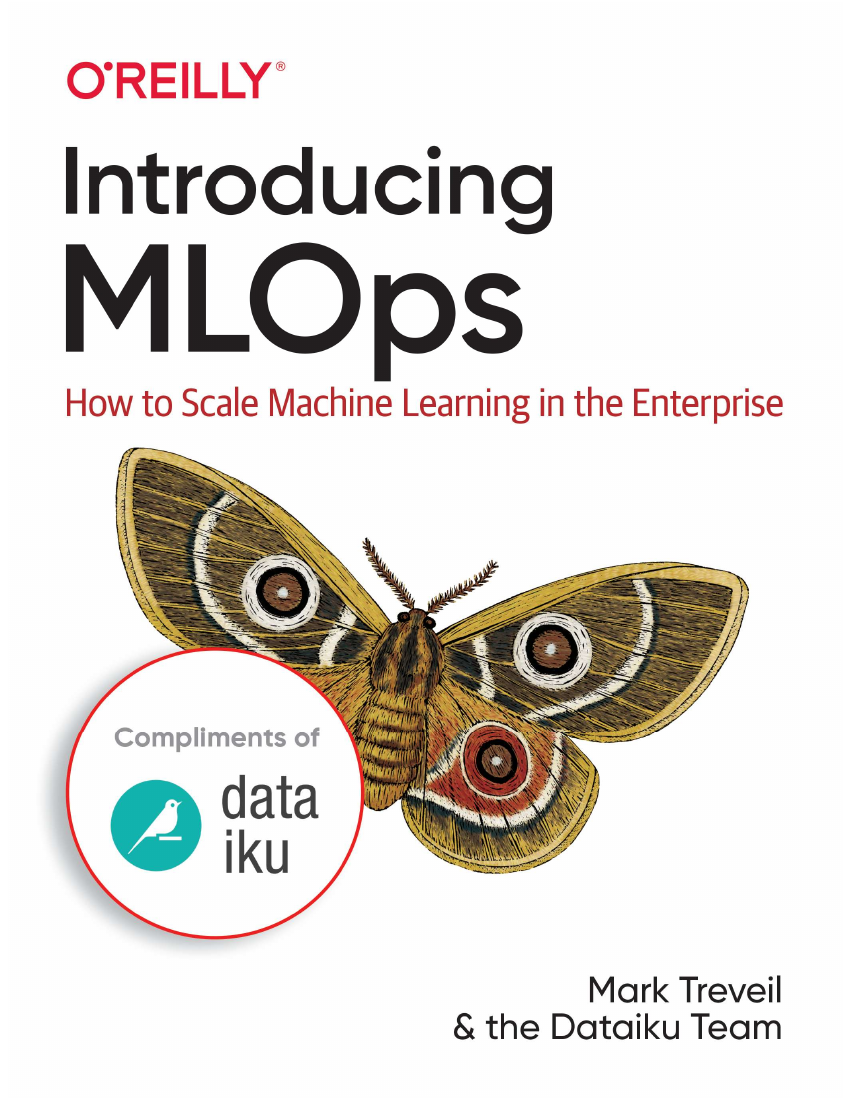
Introducing MLOps

This book helped me understand the engineering layer after model training. It was important because my goal was never only to build notebooks; I wanted to build AI systems that can be deployed, monitored, and maintained.

MLOpsProduction MLCI/CDMonitoringGovernance
Introducing MLOps

What I learned

I learned about model lifecycle thinking: preparing data, managing artifacts, versioning experiments, moving models toward production, monitoring behavior, feedback loops, governance, and the collaboration between ML engineers, data scientists, and software teams.

Why it mattered in my path

It directly influenced my end-to-end Lung Disease Detection project and my interest in MLflow, Airflow, Docker, databases, object storage, model serving, and production-style AI workflows.

How this book fits into my AI engineering path.

For me, a technical book is useful only when it becomes a working mental model. This page explains what I used Introducing MLOps for, how it connects to implementation, and why it belongs in the Education archive.

Reading purpose

This book helped me understand the engineering layer after model training. It was important because my goal was never only to build notebooks; I wanted to build AI systems that can be deployed, monitored, and maintained. I did not treat it as a passive reading item. I used it to slow down, inspect architectures, connect code with theory, and understand the engineering decisions that are often hidden behind course assignments.

Technical layer I extracted

I learned about model lifecycle thinking: preparing data, managing artifacts, versioning experiments, moving models toward production, monitoring behavior, feedback loops, governance, and the collaboration between ML engineers, data scientists, and software teams. The important point is that this book gave me vocabulary and implementation structure: how to describe a pipeline, how to compare approaches, and how to think about model behavior beyond one training log.

Impact on my next work

It directly influenced my end-to-end Lung Disease Detection project and my interest in MLflow, Airflow, Docker, databases, object storage, model serving, and production-style AI workflows. It also made the bridge to larger portfolio projects clearer: each topic can become a deployable component, a research experiment, or a part of an end-to-end AI application.
01

Conceptual depth

The page describes what I wanted to understand beneath the API calls: objectives, architectures, data representation, training dynamics, and failure modes.

02

Implementation depth

Where notebooks or code exist, the book is connected to concrete experiments instead of staying as a decorative bookshelf item.

03

Career direction

The book supports the long-term direction of becoming stronger in AI engineering, MLOps, NLP/LLMs, and advanced systems.